The 30-second identification
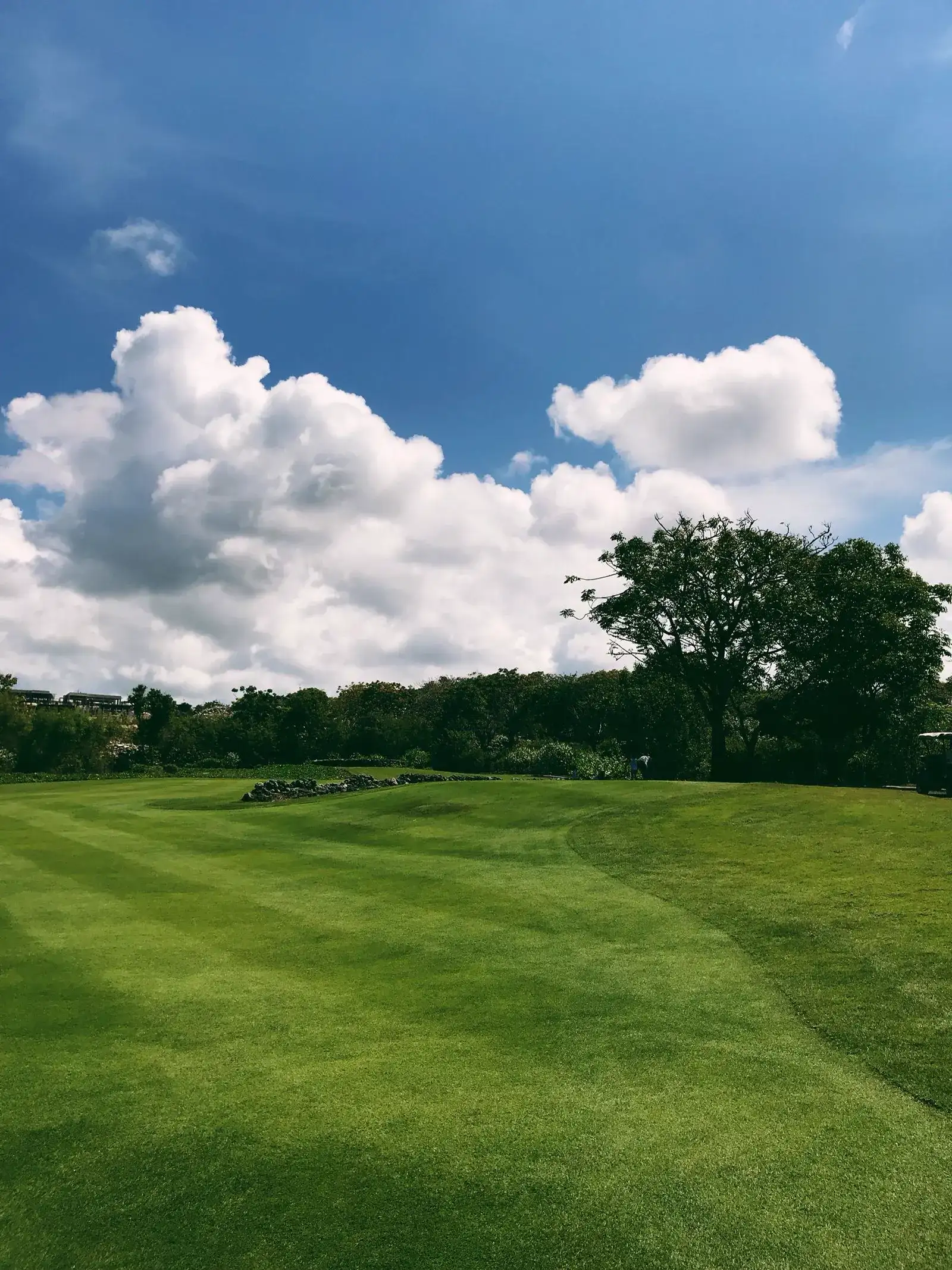
Look closely at a single blade and how the grass spreads. Bermuda has fine, narrow blades — a few millimeters wide — forming a dense, tight carpet; it spreads by both above-ground runners and underground rhizomes, which is why it creeps into flower beds and why it recovers so fast. St. Augustine is the coarse one: broad, flat blades with rounded tips, more of a lush thatch than a carpet, spreading by thick above-ground runners you can see and lift. If your lawn looks like a putting-green texture, it's Bermuda; if the blades look like little green straps, it's St. Augustine.
Where each one wins
- Sun: Bermuda demands it — six-plus hours of direct sun, and it thrives. In shade it thins to nothing. St. Augustine is the best shade grass Texas has, holding density under mature trees where Bermuda surrenders.
- Traffic: Bermuda takes kids, dogs, and backyard football and heals itself. St. Augustine wears faster and recovers slower.
- Drought toughness: Bermuda survives harsh, dry summers and bounces back from near-dead brown. St. Augustine needs more consistent water to stay happy — relevant under local watering schedules (see our watering guide).
- Cold snaps: hard winters can injure St. Augustine, which is slower to forgive a brutal freeze; Bermuda generally shrugs winter off.
They want opposite mowing
This is where knowing your grass pays off every single week. Bermuda is mowed low and often — it gets denser the more consistently it's cut. St. Augustine is mowed tall — among the tallest cuts in the neighborhood — because those broad blades are how it shades its own roots and survives August. Mow St. Augustine at Bermuda height and it declines fast. The full logic is on our mowing & maintenance page; feeding differences follow the same split and are covered in the fertilizing calendar.
Most yards are both
Here's the part the versus framing misses: many North Texas yards run Bermuda in the sunny front and St. Augustine under the back-yard trees — or started as one and are slowly becoming the other as trees grow and light changes. A thinning Bermuda patch under a maturing oak isn't a care failure; it's the yard telling you the light budget changed. Sometimes the answer is embracing the transition with St. Augustine sod in the shade zones rather than fighting it with seed and hope.
Choosing for a new lawn
Map the sun honestly: six-plus hours of direct light, high traffic, want it tough — Bermuda. Real shade, want lushness over resilience — St. Augustine. Mixed light and a bigger budget — Zoysia splits the difference. And if you'd rather have someone stand in the yard and tell you which is which, that's a normal part of a quote walkthrough.