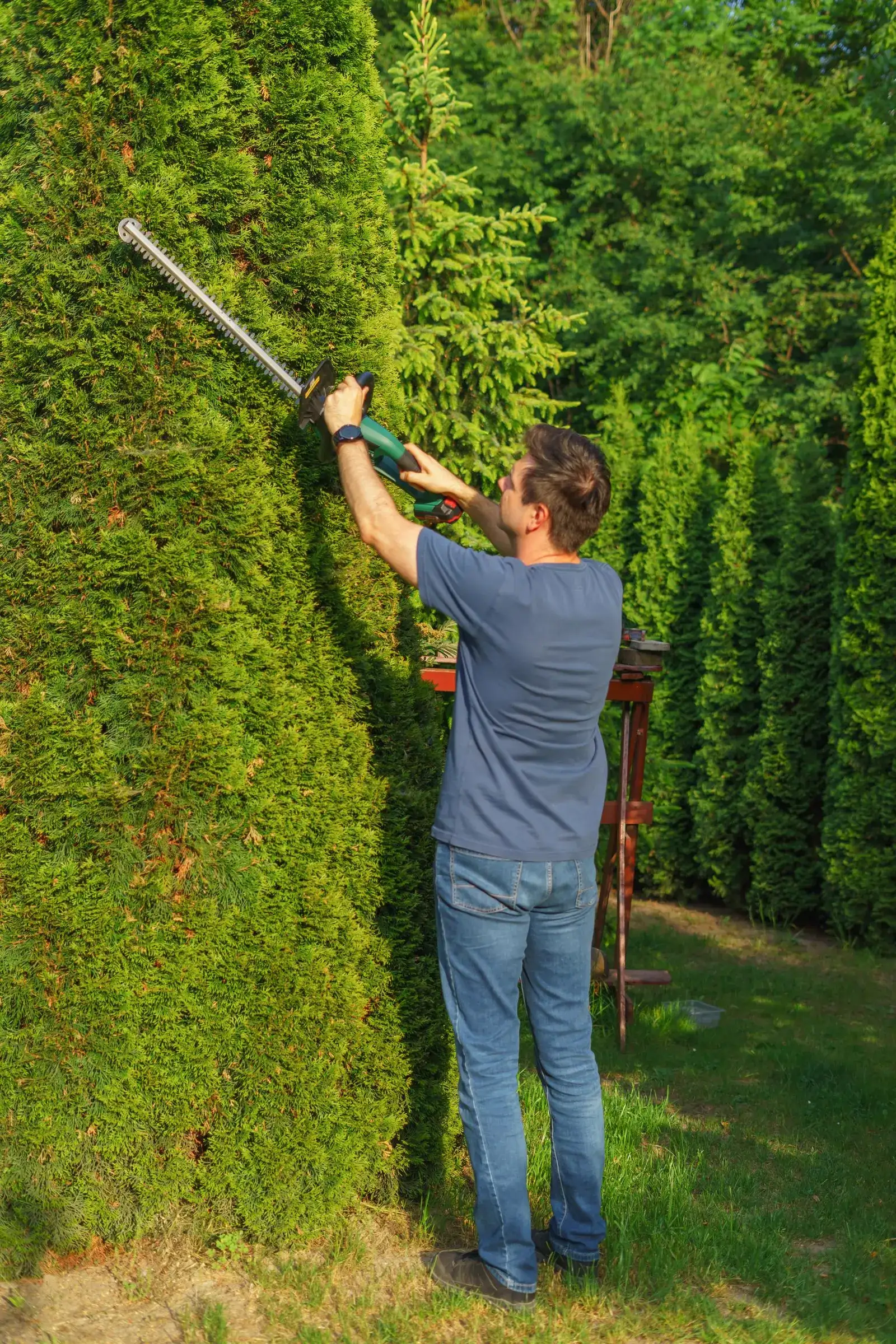
Shrubs and hedges frame everything else in the yard. When they're dense, level, and in proportion with the house, the whole property looks maintained — it's the landscaping equivalent of a fresh haircut. This service pairs naturally with a recurring maintenance schedule, because hedges grow on the same relentless North Texas timetable the grass does.
The problem with “just shear everything in June”
Most trimming damage comes from treating every plant the same. Shear a spring-flowering shrub right after it sets next year's buds and it will be green but bloomless for a year. Cut a hedge hard in the teeth of August heat and the fresh interior growth scorches. Repeated light shearing in the same plane, year after year, builds a thin green shell over a dead woody interior — the classic gas-station hedge. None of this is hard to avoid; it just requires knowing what the plant is before deciding when and how much to cut.
Timing by plant type
- Spring bloomers (azalea, Indian hawthorn, spirea): trim right after they finish flowering, never in fall or winter — that's when next spring's buds are on the wood.
- Summer bloomers (crape myrtle, vitex, rose of Sharon): shape in late winter before new growth starts; they flower on the current season's wood.
- Evergreen hedges (boxwood, holly, ligustrum, photinia): light passes during the growing season hold the shape; harder structural cuts belong in late winter so spring growth fills them in.
- Avoid hard cuts in extreme heat — late-summer shaping waits for the weather to break.
How we trim
Hedges get cut slightly wider at the base than the top, so lower branches keep getting light and the hedge stays green to the ground instead of hollowing out. Shaping follows the plant's natural form rather than forcing cubes onto everything. And every trim ends with a full cleanup — clippings off the beds, lawn, and walks, hauled away, with beds left crisp. If the beds need more than trimming — a season of overgrowth, built-up dead material — that's a yard cleanup and we'll quote it honestly as one.
One visit or on rotation
Fast growers like photinia and ligustrum look best trimmed several times a season; slower evergreens may need only a couple of visits a year. We'll look at what's planted, tell you a realistic rhythm, and fold it into your service schedule so the hedges never get ahead of the house.